Robots
Collaborative robot arms
3 to 30 kg payload, for the line and the cell.
A collaborative arm works next to people instead of behind a fence. That single difference is what keeps an installation small: no cage to build, no light curtain to design around, and a footprint you can move when the line changes.
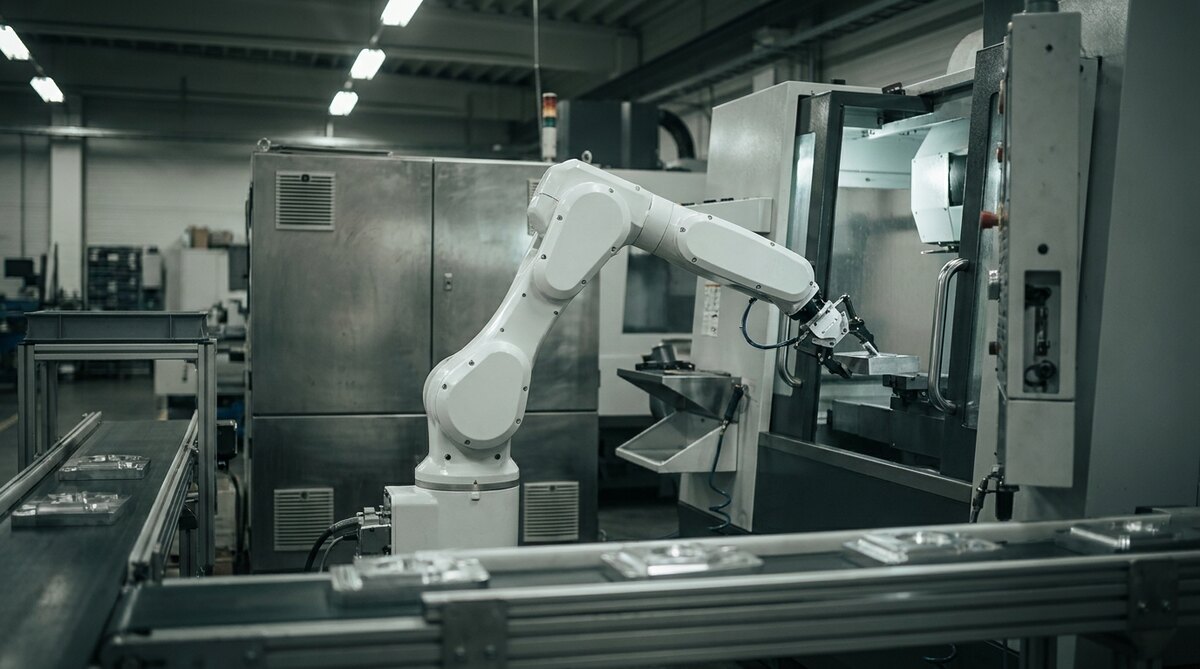
What you get
Built for the floor.
- Skin-sensing models that stop before contact.
- Washdown models for food and pharma.
- Force-sensing models for polishing and compliant assembly.
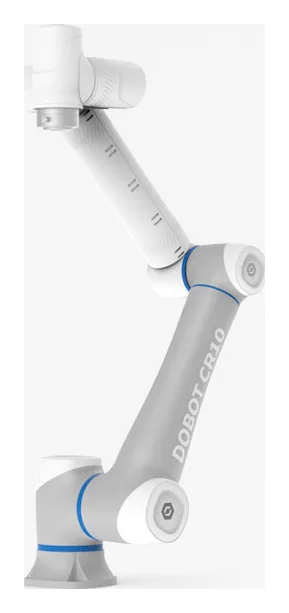
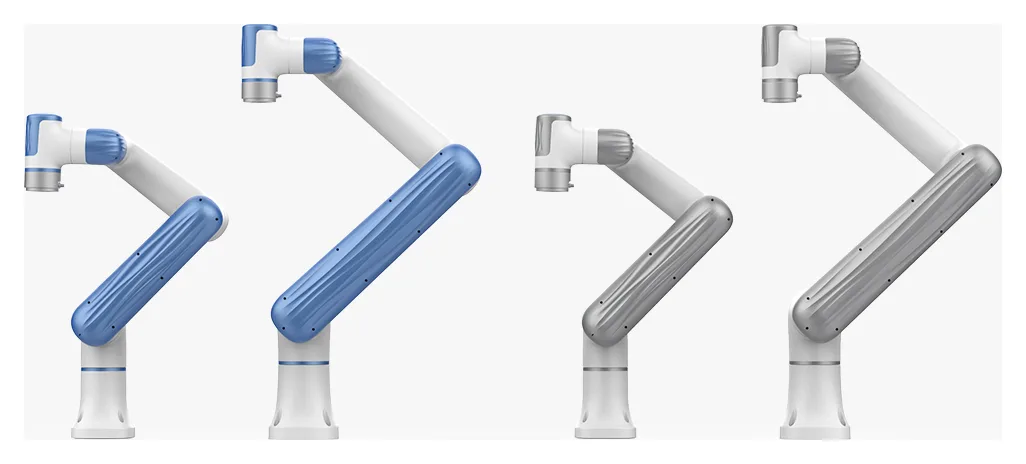
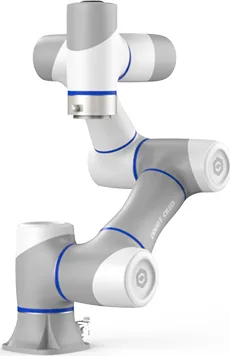
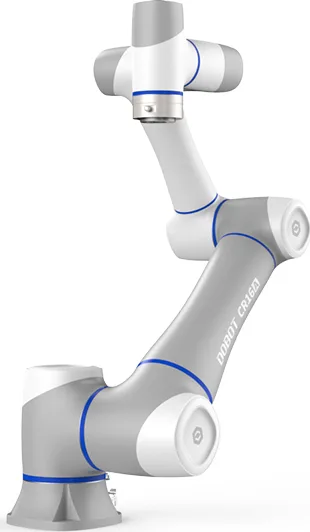
23 in this range
What we supply.
- CRA Series
- CRS SafeSkin Series
- CRAF force-controlled
- CRA-IP68 washdown
- CR30H
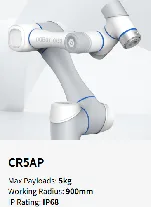
CR5AP
IP68
Specifications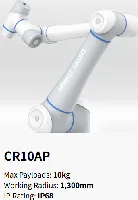
CR10AP
IP68
Specifications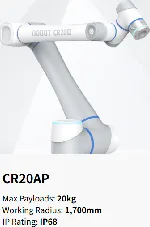
CR20AP
IP68
Specifications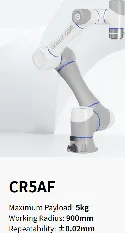
CR5AF
Force Control
Specifications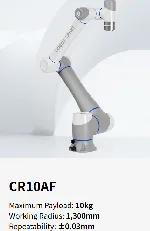
CR10AF
Force Control
Specifications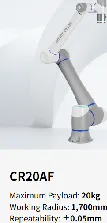
CR20AF
Force Control
Specifications
CR3A
3 kg · 620 mm
Specifications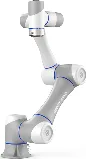
CR5A
5 kg · 900 mm
Specifications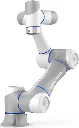
CR7A
7 kg · 800 mm
Specifications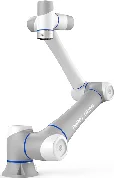
CR10A
10 kg · 1300 mm
Specifications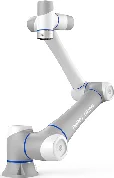
CR12A
12 kg · 1200 mm
Specifications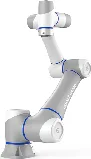
CR16A
16 kg · 1000 mm
Specifications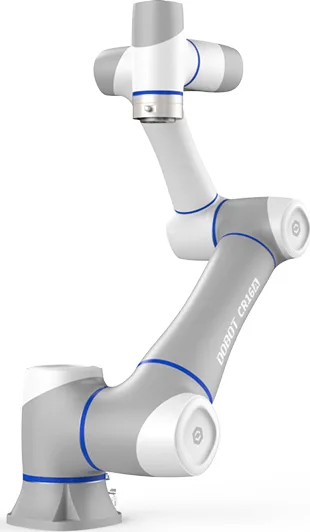
CR20A
20 kg · 1700 mm
Specifications
CR3AS
SafeSkin
Specifications
CR5AS
SafeSkin
Specifications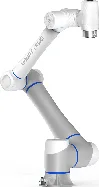
CR10AS
SafeSkin
Specifications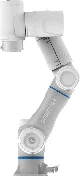
CR3S V2
SafeSkin
Specifications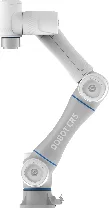
CR5S V2
SafeSkin
Specifications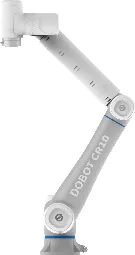
CR10S V2
SafeSkin
Specifications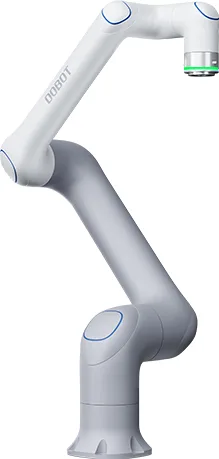
CR30H
30 kg · 1800 mm · IP67
SpecificationsCR30HT (with Torque Sensor)
30 kg · Torque Sensor
SpecificationsCR30H-Food (Clean Edition)
30 kg · NSF-certified
Specifications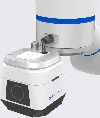
VX500 Smart Camera
2368 × 1760 · CRA
SpecificationsChoosing one
Start with the payload.
Payload is the first question and usually the one that narrows the field fastest. Weigh the heaviest thing the arm has to lift, the gripper included, then look at the models above it. Reach comes next, then whether the arm has to survive being hosed down at the end of a shift.
Beside people
No cage, by design.
Working beside people is a design decision, not a setting you switch on. The arm senses someone approaching and stops before it reaches them, which is what lets it stand on an open floor instead of inside a cage, and what lets you rearrange the line around it later without starting the safety case again.
One software family
Learn it once.
Every arm in the range runs the same software, so training is paid for once and carries across the fleet. An engineer who has scripted one arm can script any of them, and an operator who can teach one by hand can teach the rest.
How a job runs
Five steps, every time.
Every job runs the same five steps: assess, supply, integrate, train, support.
Sixteen applications where cobots pay off, from machine tending to hospitality and retail.
What an install involves
The arm is the small part.
Most of an installation is not the robot. It is the fixture that holds the part, the sensor that confirms the part arrived, and the handshake with whatever software the line already runs. That work decides whether the arm earns anything, and we do it before delivery rather than discovering it on your floor.
The arm, the gripper, the vision and the cell come from one place, so when something does not line up there is no integrator to chase and no supplier pointing at another supplier.
Pricing is quoted case by case.