Robots
Legged robots and data collection
Walking platforms for research, inspection and teaching.
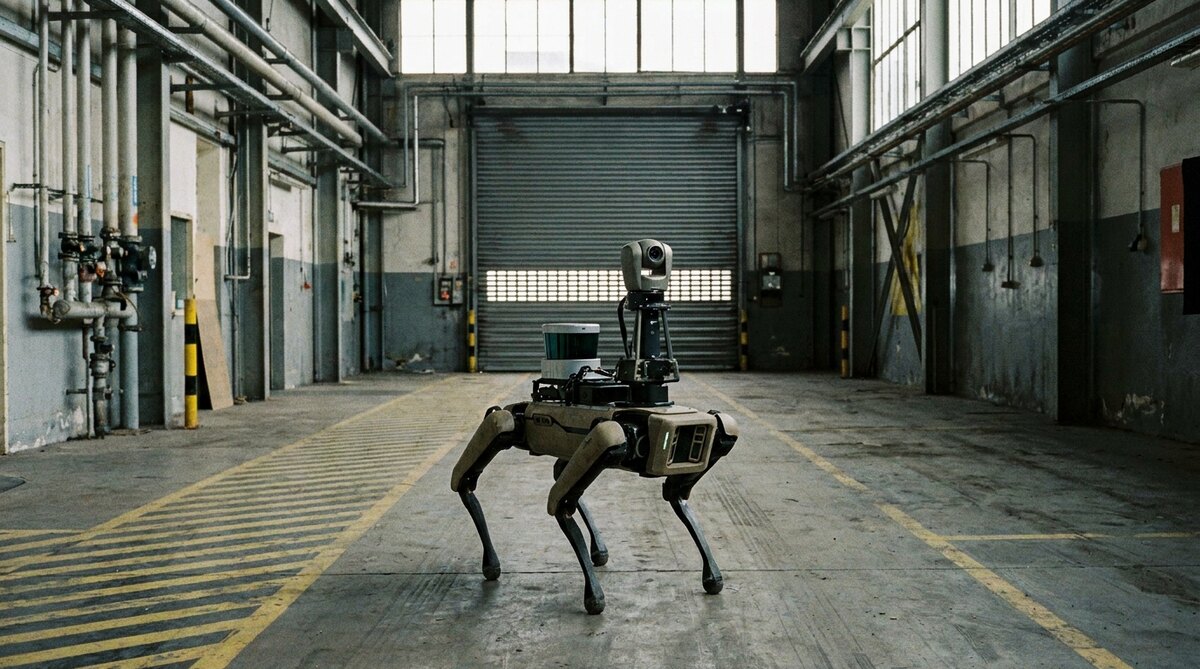
A walking robot is bought for ground a wheeled one cannot cross. That is the whole argument and it is a narrow one, which is why these mostly turn up in research groups, inspection teams, and the classrooms that feed both.
What you get
A base, an interface and room for a payload.
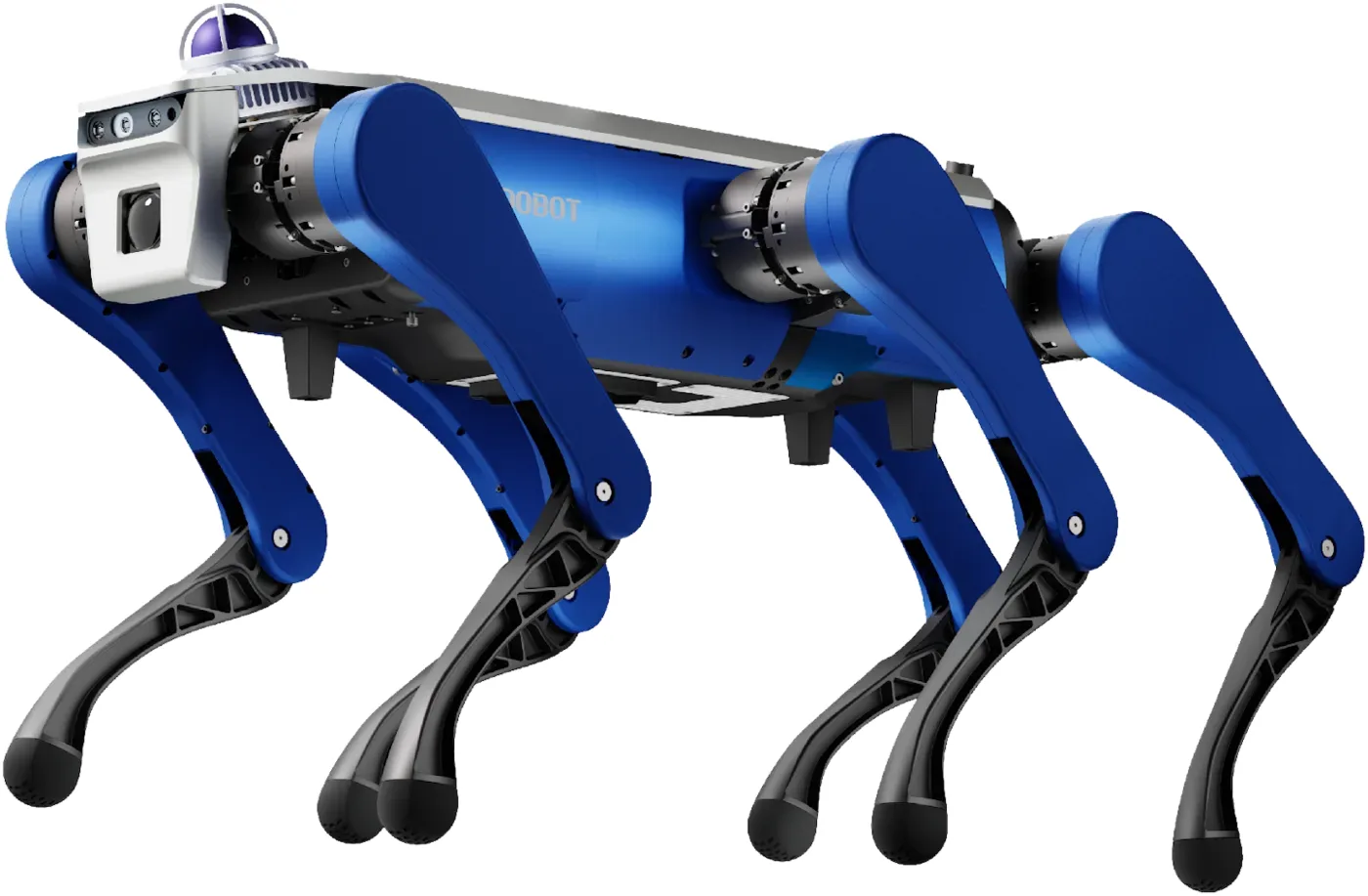
- Quadruped and six-legged platforms carrying sensor payloads.
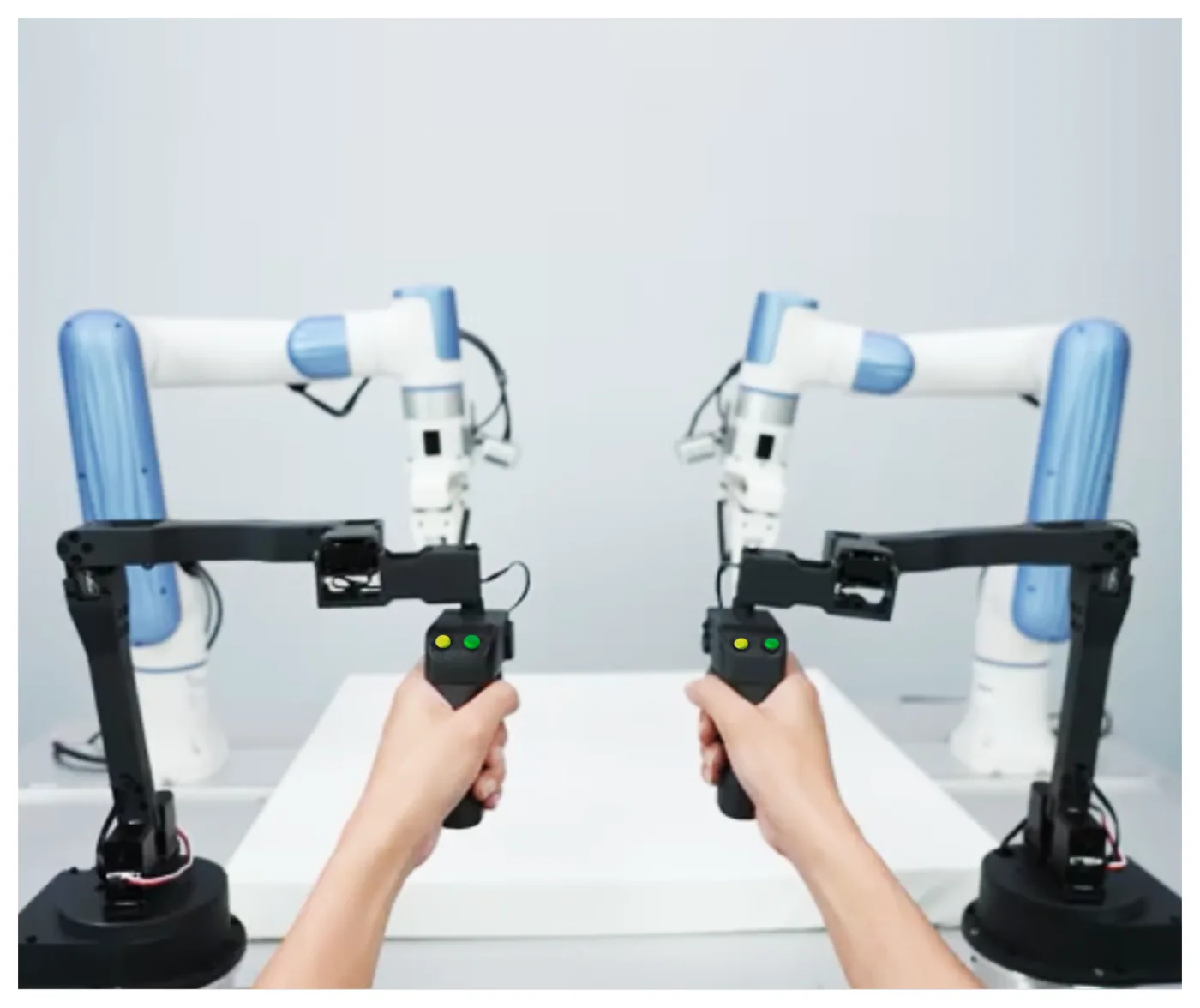
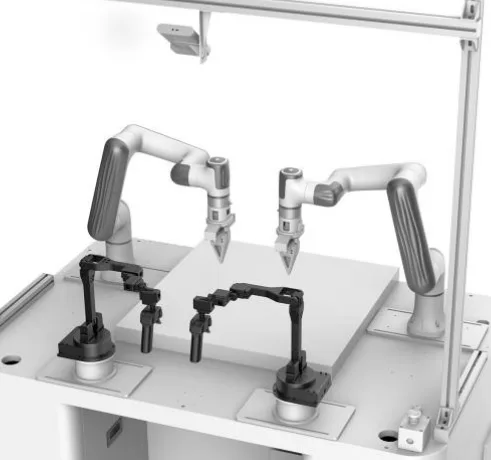
- A two-armed cell that records demonstrations for imitation learning.
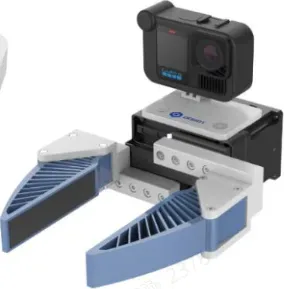
- A portable rig for gathering demonstration data away from the bench.
For a research group
Access, not capability.
For a research group the value is access rather than capability. The platform is a moving base with a published interface and room for a payload, so the work is what gets mounted on it and what it is told to do, not the walking.
Recording demonstrations
A hardware problem first.
Data collection is the other half of this range and the half that has changed fastest. A robot that learns from demonstration needs demonstrations, and recording them cleanly turns out to be a hardware problem before it is a learning problem.
In a classroom
The most persuasive object in the lab.
Both ends of that suit teaching. A walking platform is the most persuasive object in any lab, and a recording rig gives a class something to do with it beyond driving it around the room.
1 in this range
What we supply.
- Rover X1 Explorer
- Hexplorer
- Pocket Go
- X-Trainer
These are the least standard things we supply, so the conversation starts further back than usual: what are you trying to find out, and does a robot with legs actually answer it.
Pricing is quoted case by case.