STEM and robotics
Robots in class, from age three to university.
Screen-free coding for the youngest, real robot arms for teens, industrial cobots for college and university students. At our campus or on your site.
No screen until Grade 3.
The ladder
Six rungs, one robot family.
01 · Ages 3 to 8
Coding with blocks and floor robots
Pre-KG and early primary
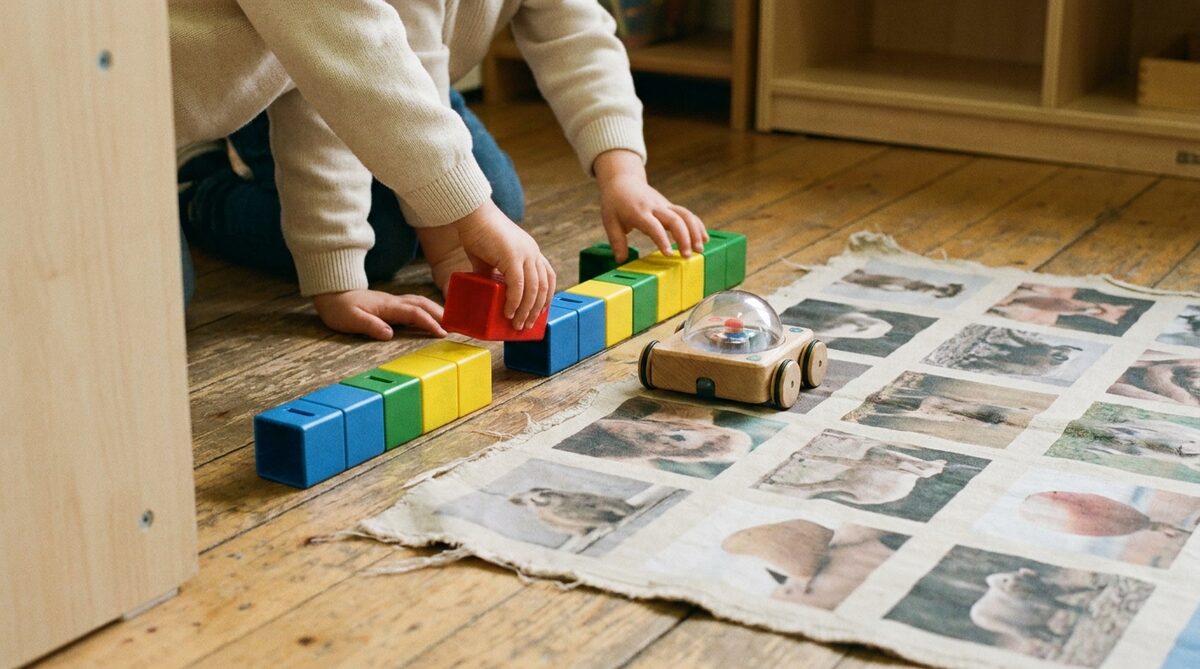
Children place real blocks in a row to program a robot, then drive a floor robot across maps for reading, maths and science. No screen and no reading needed.
Education robots02 · Ages 8 to 12
Sensors, cameras and first Python
Upper primary
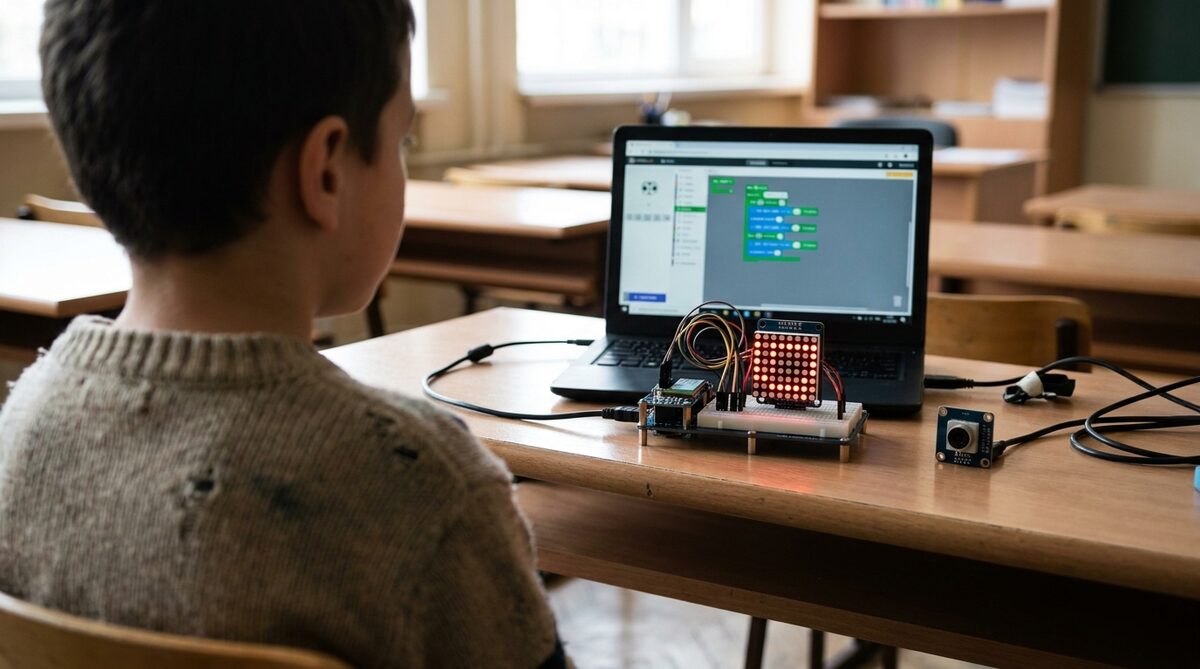
The move from blocks to code on screen. Sensors, an LED matrix, and a camera that spots faces, colours and tags.
Education robots03 · Grades 6 to 9
AI kits and real robot arms
Middle school
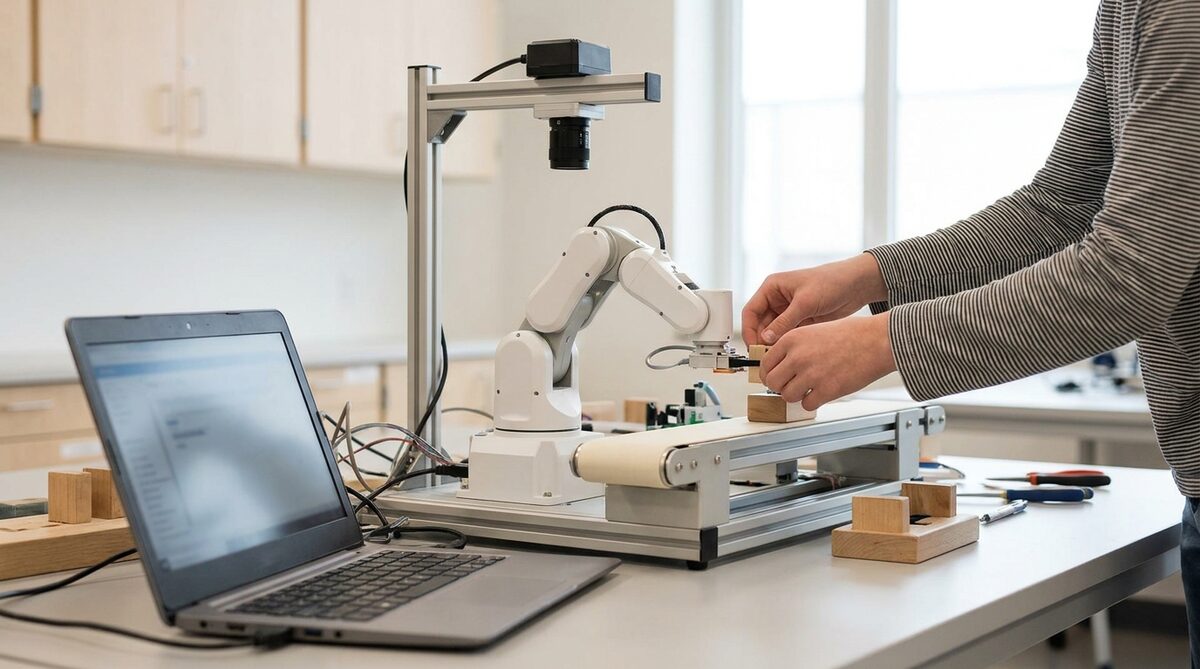
Machine learning, speech and self-driving on a modular kit. Then a real four-axis desktop arm with a conveyor, a rail and a camera.
Compact and desktop arms04 · Grades 10 to 12
Six-axis cobots and machine vision
Secondary
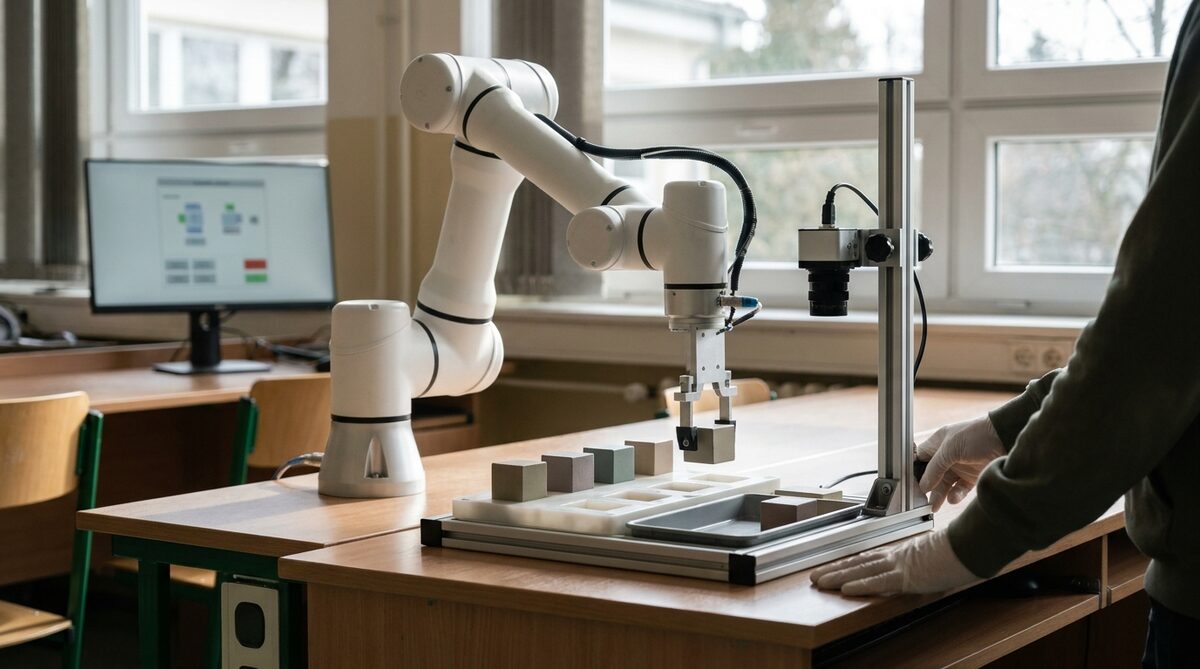
Python, pick and place, grippers, vision and mini assembly lines on a real six-axis cobot. Factory skills at classroom size.
Collaborative arms05 · Vocational
Operator skills on industrial cobots
Technical and TVET colleges
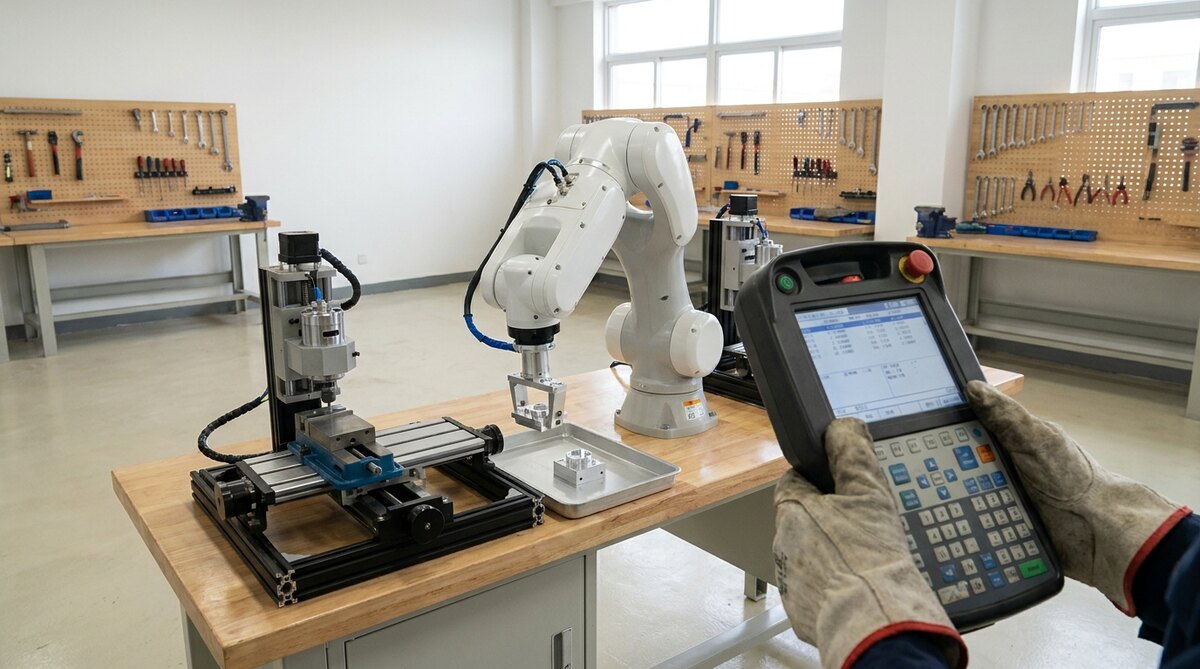
Machine tending, palletizing, welding and screwdriving cells, taught by drag-to-teach on the same cobots used on the line. Ends with the DOBOT Certificate.
Work cells06 · University
Engineering courses and research platforms
Engineering and research
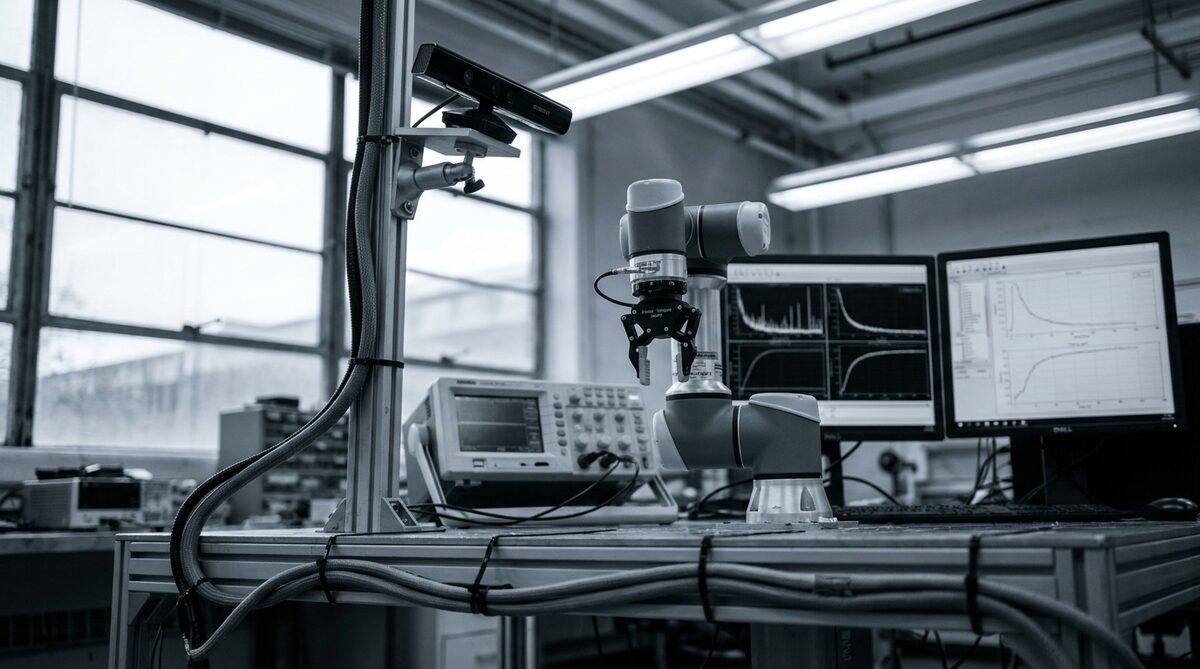
Cobot programming, vision and force control for engineering and computer-science degrees. Final-year projects and research on humanoids and data-collection rigs.
Humanoids
Why the first two rungs have no screen
The screen is a change of tool, not the start of the subject.
Programming is putting steps in order, repeating them, setting a rule and finding the mistake. None of that needs a screen, and at three, four and five years old a screen gets in the way of it. So the first two rungs are blocks a child can hold and a robot that answers straight away, on the floor, in front of the class. When the screen arrives in Grade 3, drag-and-drop is the screen version of the blocks they already know, and Python is the words version of the drag-and-drop.
The argument
The same software from the coding mat to the cell.
Every rung runs on one robot family with one software family and one Python API. A child who taught a desktop arm by hand in Grade 6 is doing what an operator does on a factory floor, in the same software, using the same words for the same parts. That is why a school lab, a college cell and a production line can all be supplied, taught and serviced by one team.
Formats
Who it runs for.
For schools
Robotics clubs at the school, term programmes on your site, and teacher training.
Robotics labs for schoolsFor colleges and universities
University short courses, operator certification, the DobotLab platform and the DOBOT Certificate.
University and vocational labsQuestions
What parents and schools ask.
Is a three-year-old really programming a robot?+
Yes, without a screen. They place physical blocks in a sequence and the robot follows it. Sequencing, cause and effect, and fixing a mistake are the whole of programming at that age.
Are the teen cobots real industrial robots?+
Yes. Six-axis collaborative robots from the same family factories run, at classroom size, with the safety that lets them work next to people.
Does the ladder lead to a qualification?+
Badges and a portfolio through school, and the DOBOT Certificate on the vocational operator track.
Can a school run this without a robotics teacher?+
Yes. We train the existing staff and co-teach the first term.
The ladder is the argument for the whole company: one robot family from the coding mat to the factory cell.