Robots
Education robots
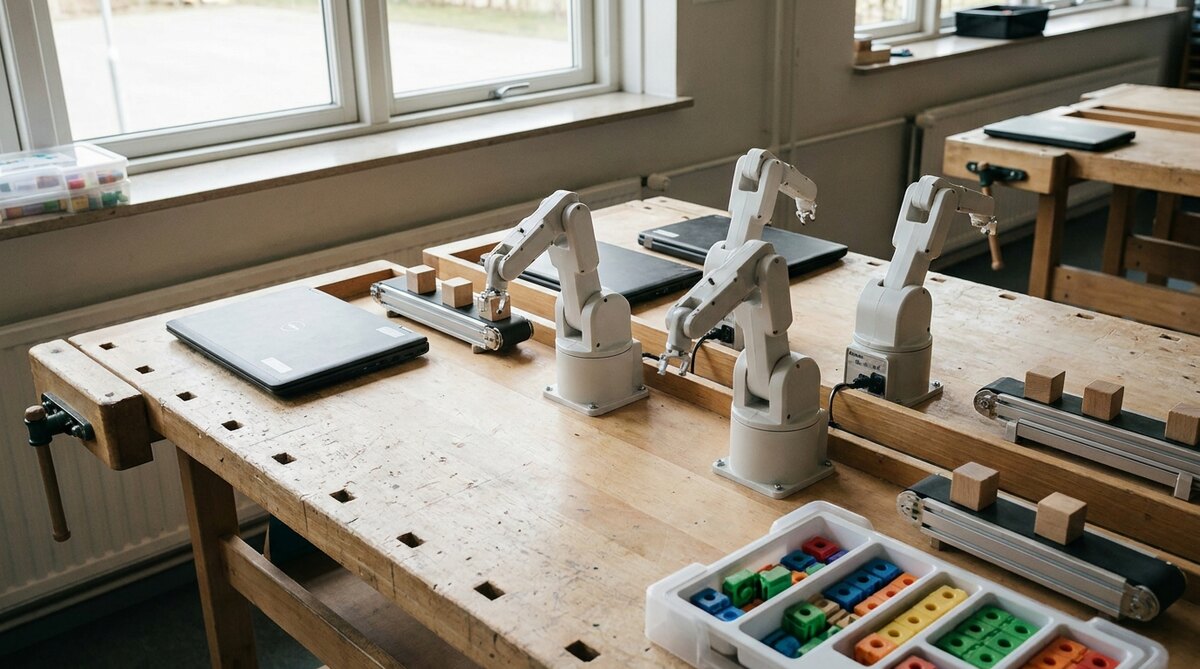
Desktop arms built for classrooms, four-axis and six.
The argument for teaching on these is not that they cost less, though they do. It is that they are the same thing, smaller. A student who has taught a desktop arm by hand has done what an operator does on a factory floor, in the same software, using the same words for the same parts.
What you get
Why teach on these.
- Four-axis desktop arms for 3D printing, laser engraving and drawing.
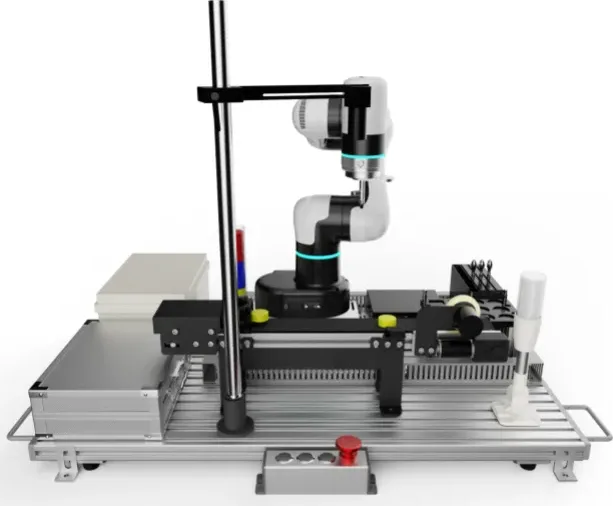
- A six-axis desktop cobot for senior and vocational classes.
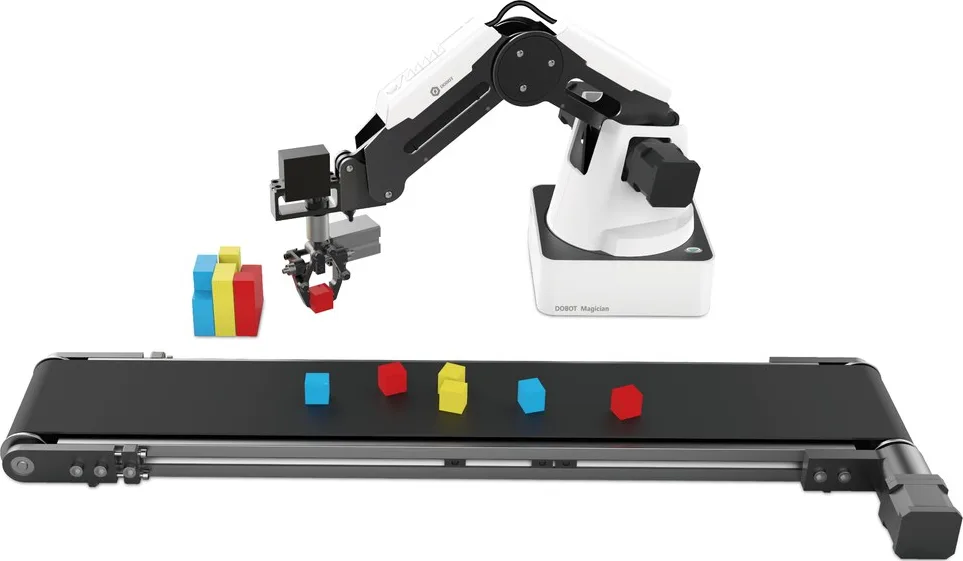
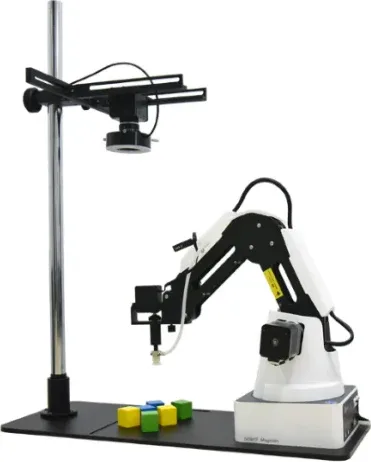
- Conveyors, vision kits, sensor kits and a mobile platform around them.
A ladder, not a catalogue
Four axes, then six.
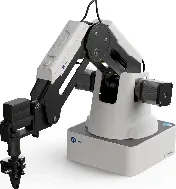
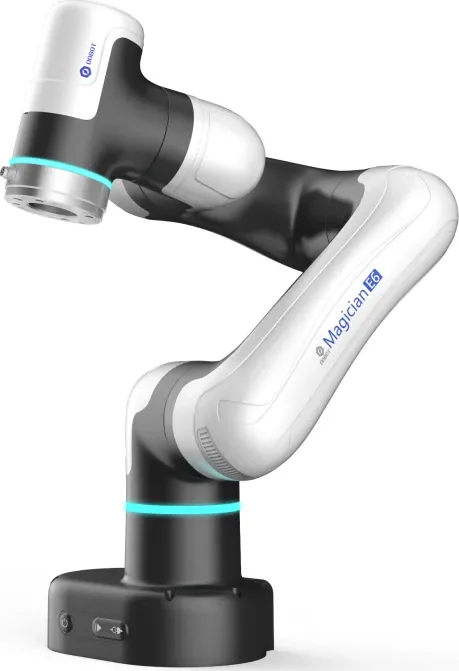
The range is a ladder rather than a catalogue. A younger class starts on a four-axis arm doing one thing at a time. A senior or vocational class moves to a six-axis arm and meets the wrist, the tool flange and the reason a robot has more joints than it looks like it needs.
Before the arms, the floor robots and coding blocks used from age three have no screen at all.
Surviving a cohort
A harder life than a factory.
A classroom is harder on a robot than a factory in one respect: it is handled by someone new every period, and it has to survive that and still be accurate on Friday. These are built for that, which is why the bases are heavy and the joints are covered.
What goes around it
The arm is one lesson of several.
Most of the teaching is in what goes around the arm. A conveyor turns a pick into a line. A camera turns a fixed position into a search. A sensor kit turns a program into a response. Each one is a lesson the arm on its own cannot teach.
9 in this range
What we supply.
- Magician Lite
- Magician
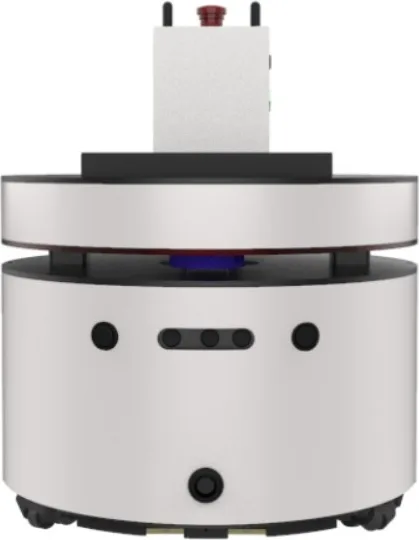
- MagicianGo
- Magician E6
Magician Lite
4-Axis · 250 g
Specifications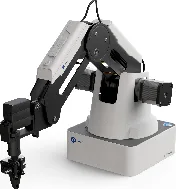
DOBOT Magician: Basic Version
Basic Version
Specifications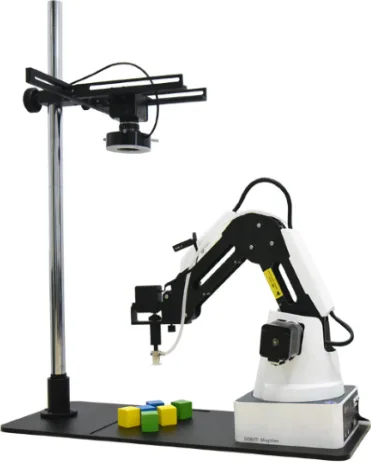
Vision Kit
M1 Pro · MG400
Specifications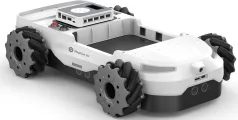
MagicianGo
Omnidirectional AGV
Specifications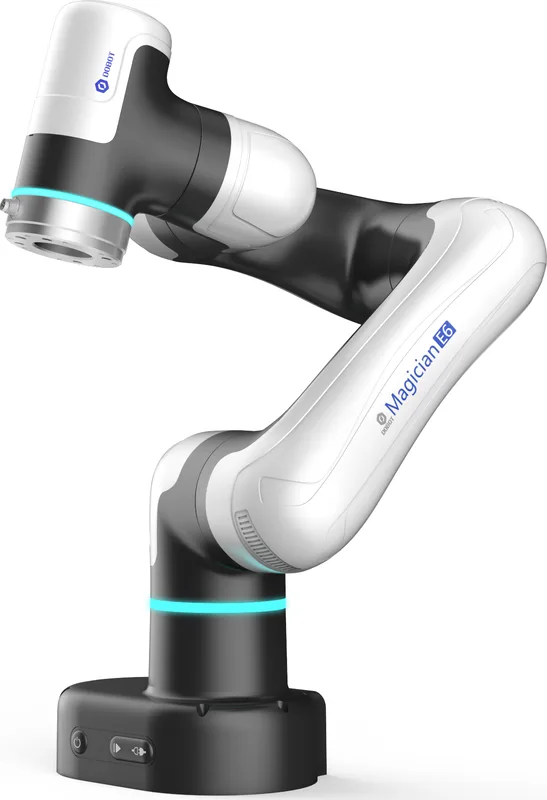
Magician E6 Robot
6-Axis · 750 g
Specifications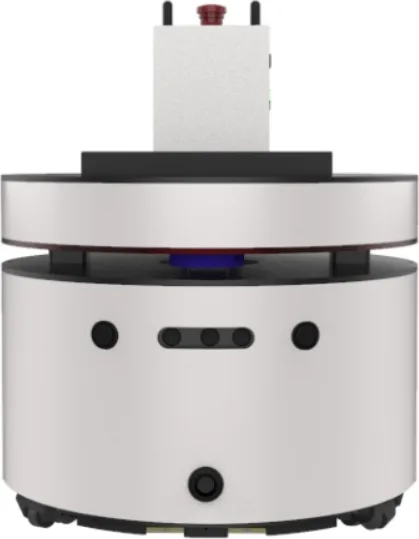
E6 AMMR: Autonomous Mobile Manipulation Base
ROS / SLAM
Specifications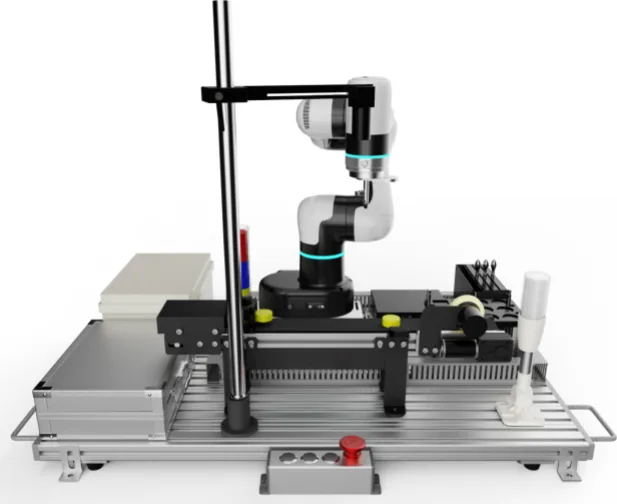
Training System Without PLC
Specifications
Training System With Siemens PLC
Siemens PLC
Specifications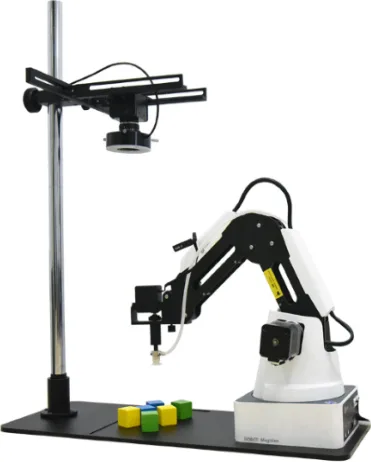
Vision Kit
Vision
SpecificationsWe supply these and we also teach on them. If you would rather not run the classes yourself, the equipment in our own classrooms is the equipment on this page.
Pricing is quoted case by case.