Robots
Compact and desktop industrial arms
Light assembly and pick and place, on a counter-sized footprint.
A compact arm earns its place by the space it does not take. It sits on the bench beside the person already doing the job instead of displacing a workstation, and when the line changes it moves on a trolley rather than a crane.
What you get
Small enough to put where the work is.
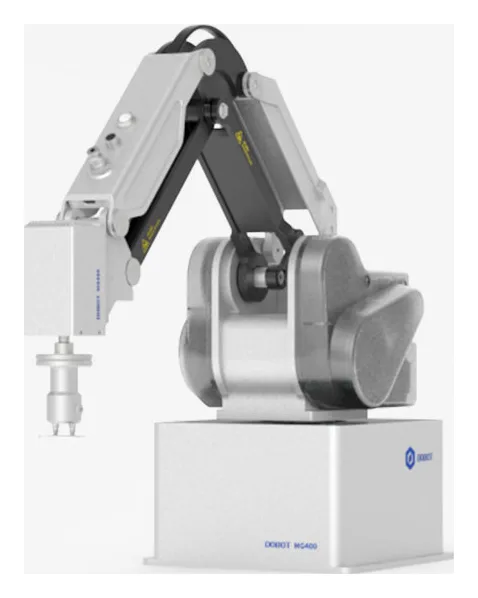
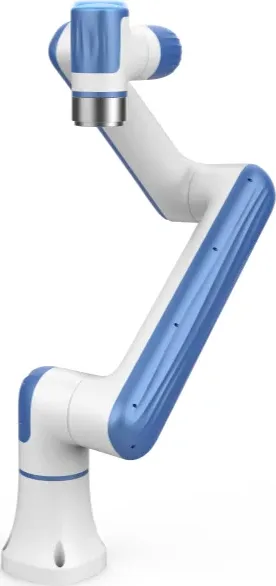
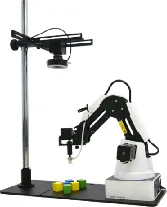
- A desktop industrial cobot on a 190 by 190 mm base.
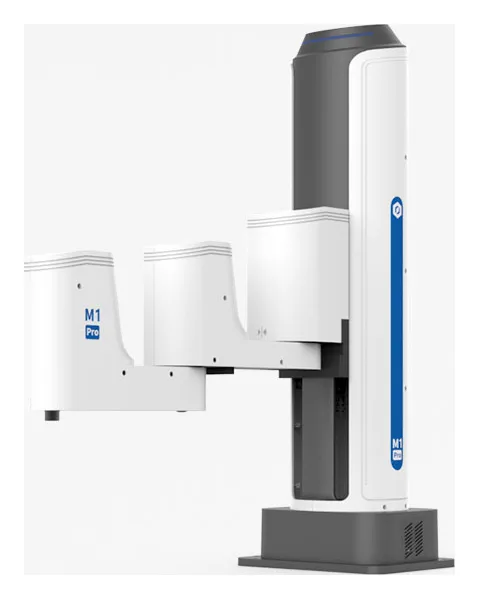
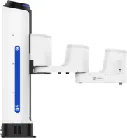
- A portable SCARA for screwdriving and assembly.
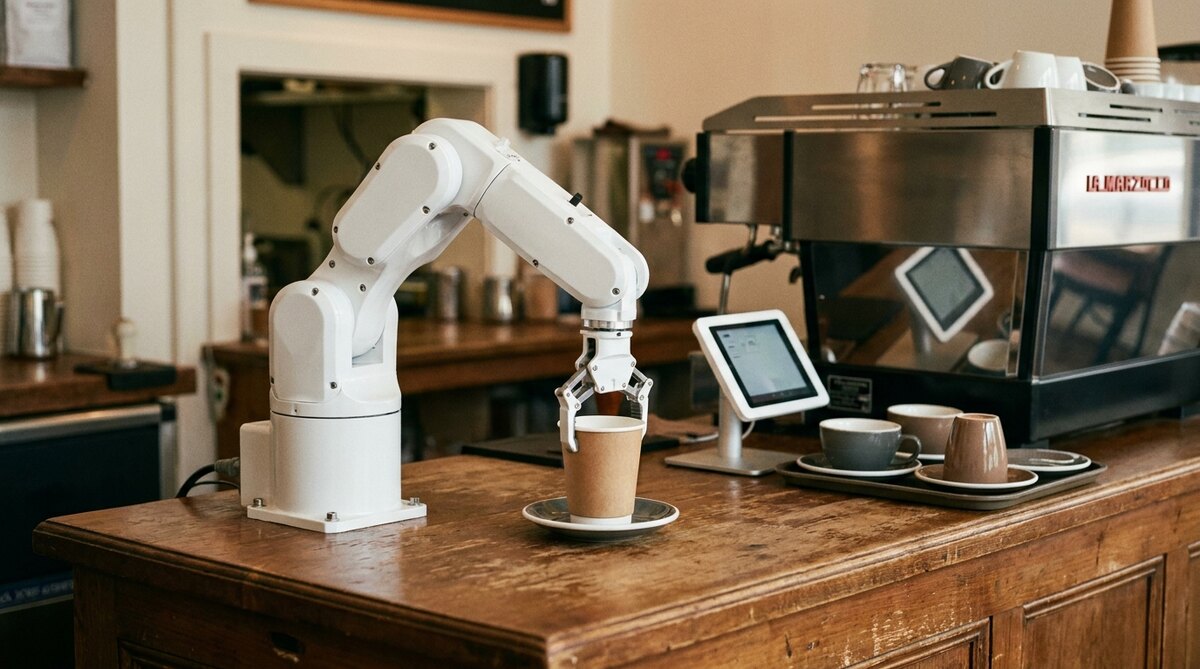
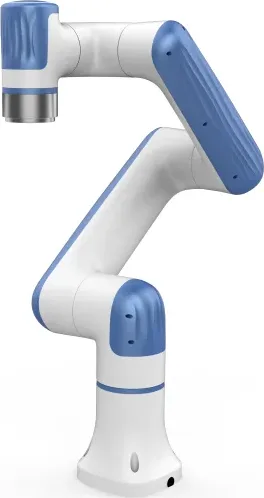
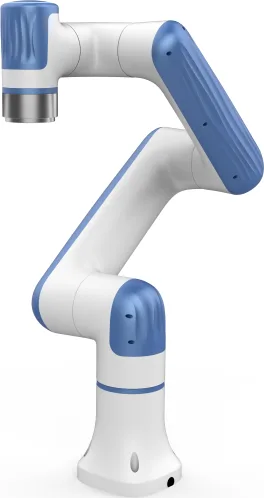
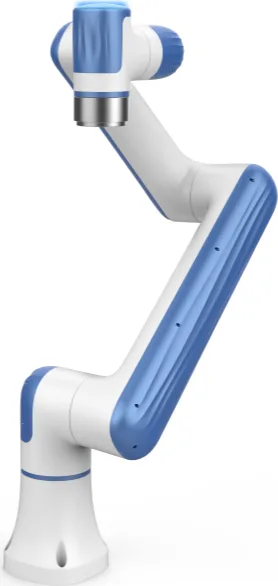
- Light six-axis arms for retail, hospitality and clinics.
Choosing one
Start with the footprint.
These get chosen on footprint first and payload second, which is the reverse of how the larger arms get chosen. The question is whether the arm fits where the work already happens, because moving the work to the robot is most of what makes a small automation project expensive.
What they do
Light work, all shift.
The jobs that suit them are light and repetitive: feeding a small machine, driving screws, placing parts in a tray, testing a board. None of that needs reach or force. It needs the same motion done the same way for a whole shift, which is what an arm is better at than a person.
Not only factories
Counters, clinics and kitchens.
The lightest of them get bought for rooms that are not factories at all. A counter in a shop, a clinic, a kitchen. Working beside customers rather than beside staff changes what matters, and quiet and predictable beat fast.
5 in this range
What we supply.
- MG400
- M1 Pro
- Nova 2
- Nova 5
How a job runs
Five steps, every time.
Every job runs the same five steps: assess, supply, integrate, train, support.
Sixteen applications where cobots pay off, from machine tending to hospitality and retail.
Who buys them
Where a small arm earns its bench.
Counters, clinics, kitchens and light assembly.
Because they run the same software as the bigger arms, a compact one is a cheap way to find out whether automating a job works at all, before committing to the cell that would do it properly.
Pricing is quoted case by case.