WonderDuck robot duck: questions answered, from walking to delivery
Zeta42 · 13 November 2026
What WonderDuck is, how it learns to walk, what is open, how it compares with Microduck, and how to order one in the UAE.
The WonderDuck robot duck has drawn a lot of interest since robot ducks went viral this autumn, and the same questions keep reaching us. This guide answers them, from how it learns to walk to what you can change inside it and how to order one in the UAE. Zeta42 is Hiwonder's authorised partner in the Middle East and sells WonderDuck across the GCC.
What is the WonderDuck robot duck?
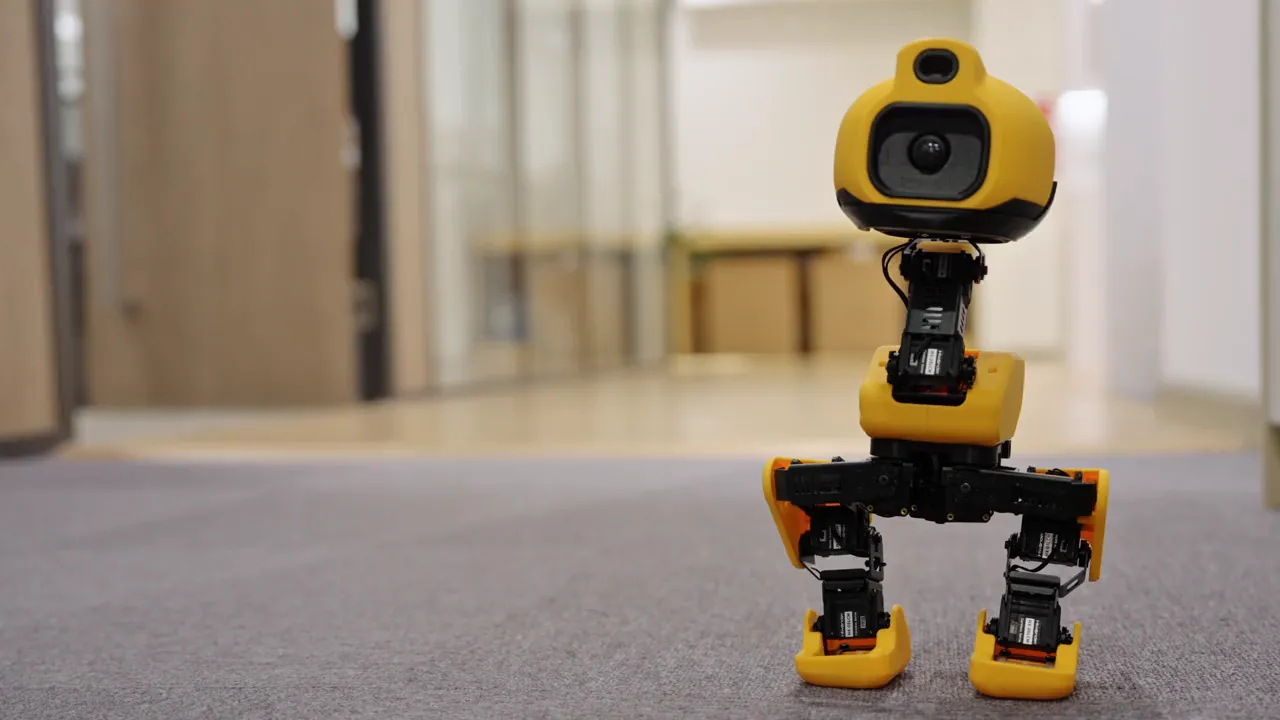
WonderDuck is a small two-legged robot shaped like a duck, made by Hiwonder, a robot kit maker in Shenzhen. It has 15 joints driven by bus servos, a camera in its head and a Linux computer inside. It is built for learning robotics: it walks and balances on its own from the day it arrives, and everything that makes it work, from the shell files to the training projects, is published so it can be studied and changed.
How does it learn to walk?
In simulation, before it ever touches a floor. Its walk was trained with reinforcement learning, using the PPO method in the MuJoCo physics simulator with mjlab, under randomised conditions so the policy copes with the friction and bumps of a real floor. The trained policy then runs on the duck itself. Interesting Engineering described this as covering the whole path, from simulation training to policy deployment to the real duck. With Hiwonder's WonderRL tool you can train a walking policy of your own the same way, export it as an ONNX file and load it onto the robot.
What can it do out of the box?
- Walk, using the policy it arrives with.
- Get itself back up after it tips over.
- Sit down, and stand again on command.
- Peck at small things on the floor.
- Follow a person, respond to hand signs and follow a line, using its camera.
- Send what its camera sees to the phone app, which also drives it.
What does open hardware mean here?
Hiwonder publishes WonderDuck's 3D structural files for the shell and frame, its hardware schematics and its low-level source code. The simulation and training projects come with them, along with the steps for moving a trained policy onto the robot. In practice a class can reprint a shell, change a part, add a module, or trace a command from the software down to a single joint. Hiwonder also supplies courses and a development manual.
How is WonderDuck different from Microduck?
Microduck is the robot duck from Pollen Robotics, part of Hugging Face, that NVIDIA's chief executive played with on stage at GTC Berlin in October 2026. TechCrunch reported that its pre-orders passed 20,000 the day after the video spread. Both ducks learn to walk in simulation and then run that policy on a real robot. The difference Interesting Engineering pointed to is the hardware: WonderDuck's hardware structure, code and training projects are all open, while Pollen Robotics has said Microduck's hardware designs are not open source. For a course where students change the robot as well as its software, that is the deciding point.
What is inside?
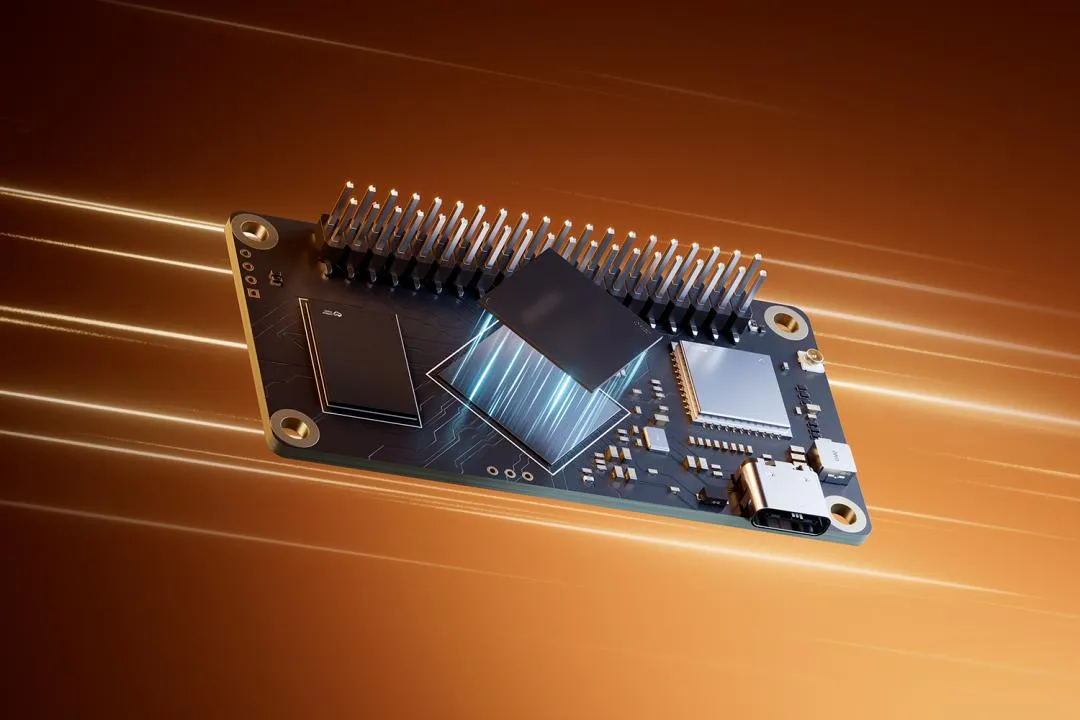
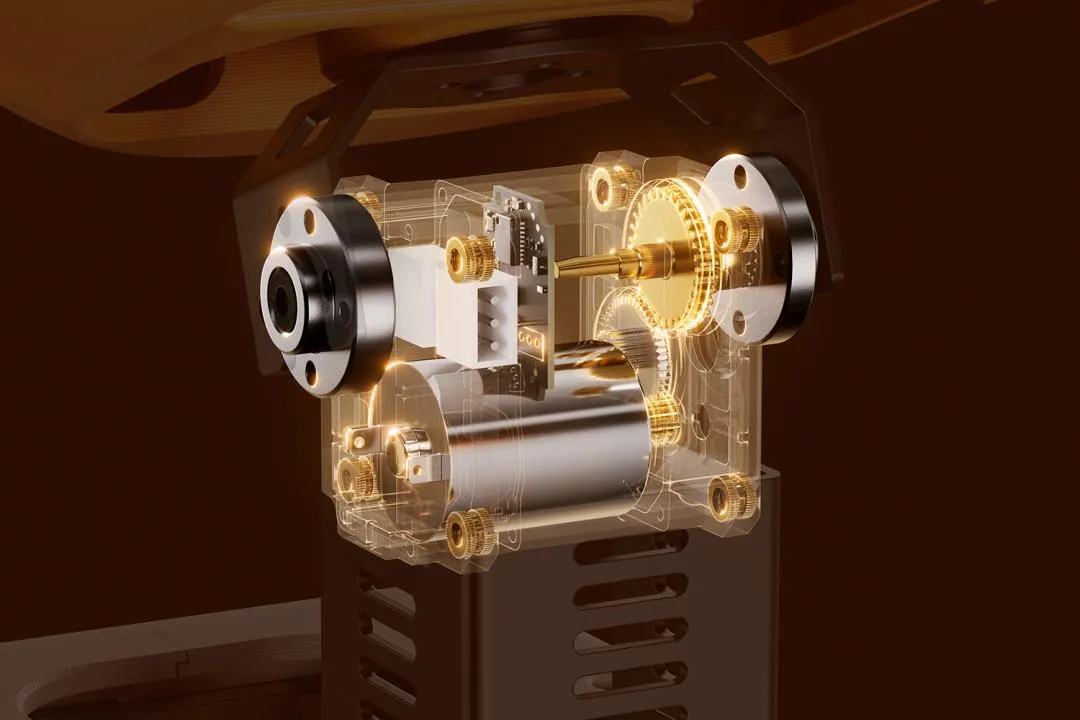
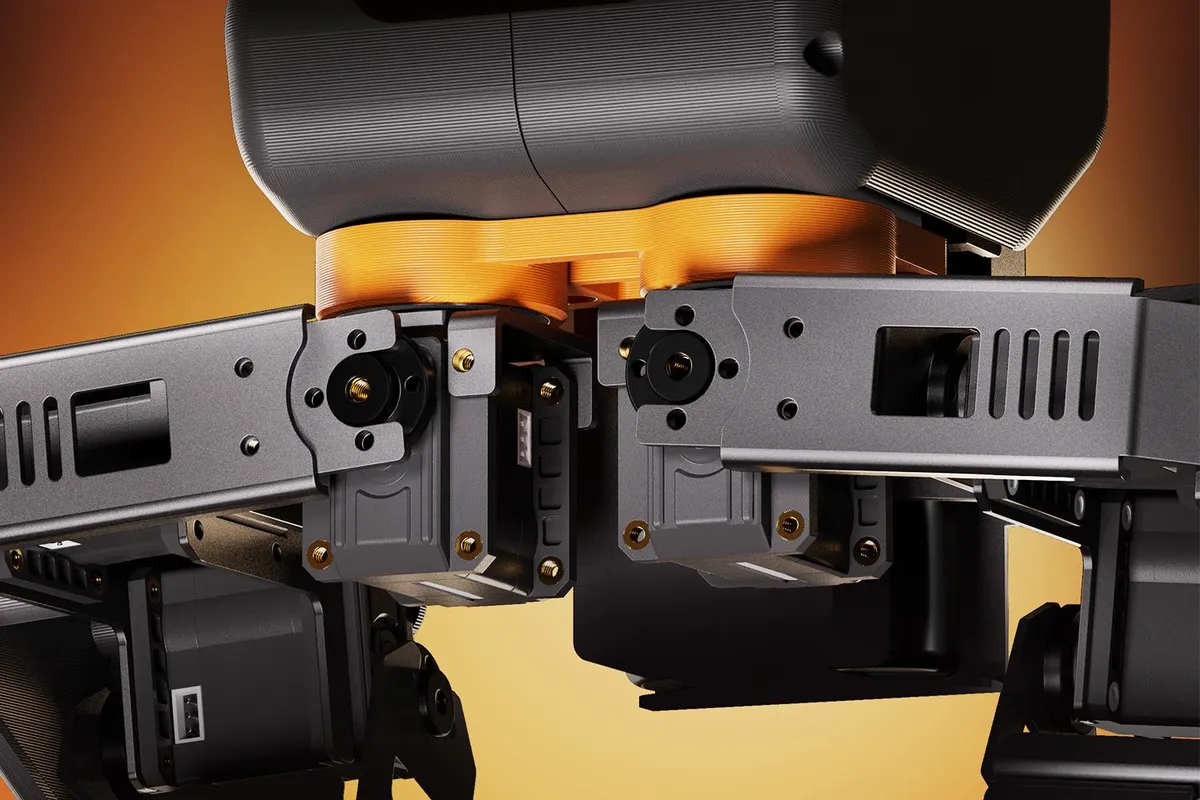
Each of the 15 joints is an HX-08LCM bus servo with steel gears and a 12-bit magnetic encoder, and each reports its position, temperature and voltage. An RK3566 board running Linux handles the walking policy, vision and video, while an AT32 co-processor reads the two motion sensors and drives the servos in a 50 Hz balance loop. Duralumin brackets keep the frame in shape through repeated falls, and the 3D-printed shell comes apart in modules. There is an 8-megapixel camera, a time-of-flight distance sensor, a microphone and a speaker, and a 7.4 V lithium battery powers it all.
Who is it for?
Secondary school robotics clubs, and university courses in robotics, control and machine learning. Students can start with it as it comes, then go as far as retraining how it walks, with Hiwonder's courses and manual covering motion control, reinforcement learning and vision. Because it is built to fall over and get back up, it makes a forgiving first robot for learning to train a walking policy.
How much is WonderDuck in the UAE, and when does it ship?
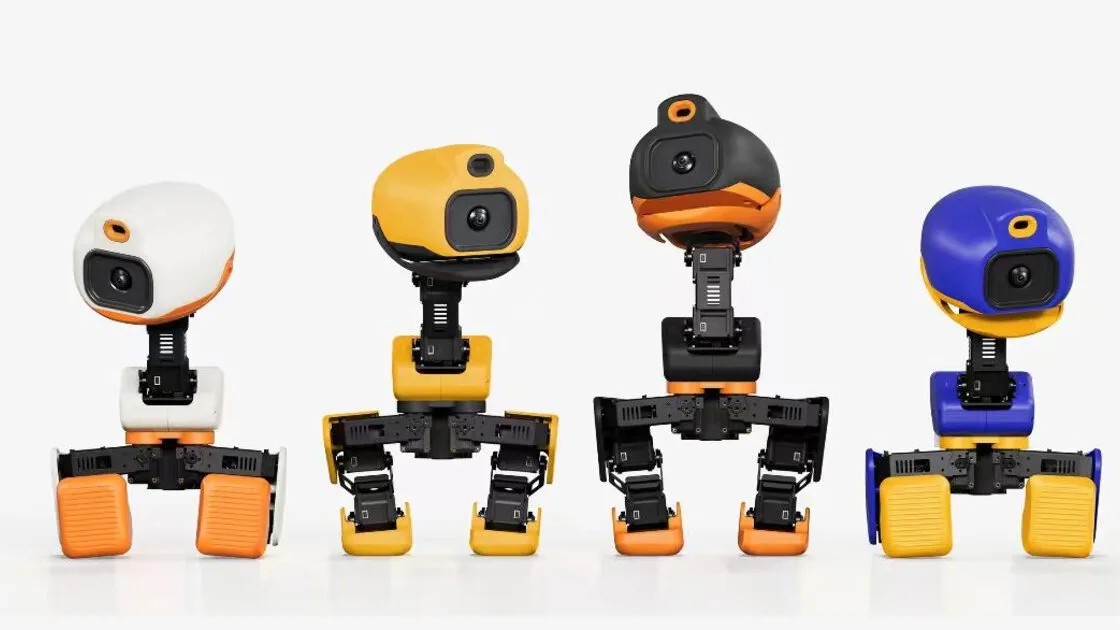
WonderDuck is AED 2,299, with 5% UAE VAT included. It comes in four colours (white and orange, yellow, black and orange, and blue and yellow), and one order can mix them. You pay by card on a secure checkout when you order. Delivery is free within the UAE, Zeta42 also delivers to Saudi Arabia, Qatar, Kuwait, Bahrain and Oman, and the first units are expected to ship in mid-December 2026. The WonderDuck page has the delivery charges and the pre-order terms.
Can a school order a class set?
Yes. One online order can hold up to 99 ducks, in any mix of colours. For more than that, for delivery outside the GCC, or to buy on an invoice or a purchase order, ask for a quote on the WonderDuck page and we will reply by email. Schools planning robotics across a whole year can also read how we work with schools.
Common questions
- Is WonderDuck open source?
- Yes, the hardware as well as the software. Hiwonder publishes the 3D structural files, hardware schematics, low-level source code and the simulation and training projects used to teach it to walk.
- How much does WonderDuck cost in the UAE?
- AED 2,299 each, with 5% UAE VAT included and free delivery in the UAE. Zeta42 also delivers across the GCC, and the first units are expected to ship in mid-December 2026.
- What can WonderDuck do out of the box?
- It walks, gets itself back up after a fall, sits and pecks. With its camera it can follow a person, respond to hand signs and follow a line, and the phone app drives it and shows what it sees.
Source: zeta42.com