How UAE Schools Are Teaching AI, From Play-Based Lessons to Neural Networks
Zeta42 · 17 September 2026
UAE schools have begun rolling out the new AI curriculum. Here is how schools in Dubai and Abu Dhabi are teaching it, from play-based lessons to neural networks.
At a glance
- The UAE has approved an AI curriculum for all public and private schools, covering AI data, algorithms, applications, risks and ethical use.
- About 22,000 teachers and educators are to be trained to use AI in teaching, assessment and lesson planning.
- Early-years AI lessons can be almost entirely play-based. Supervised AI tools follow in primary, and secondary students move on to machine learning and neural networks.
- Most of the schools quoted stress judgement: children who question AI, understand its limits and use it responsibly.
From approval to the classroom
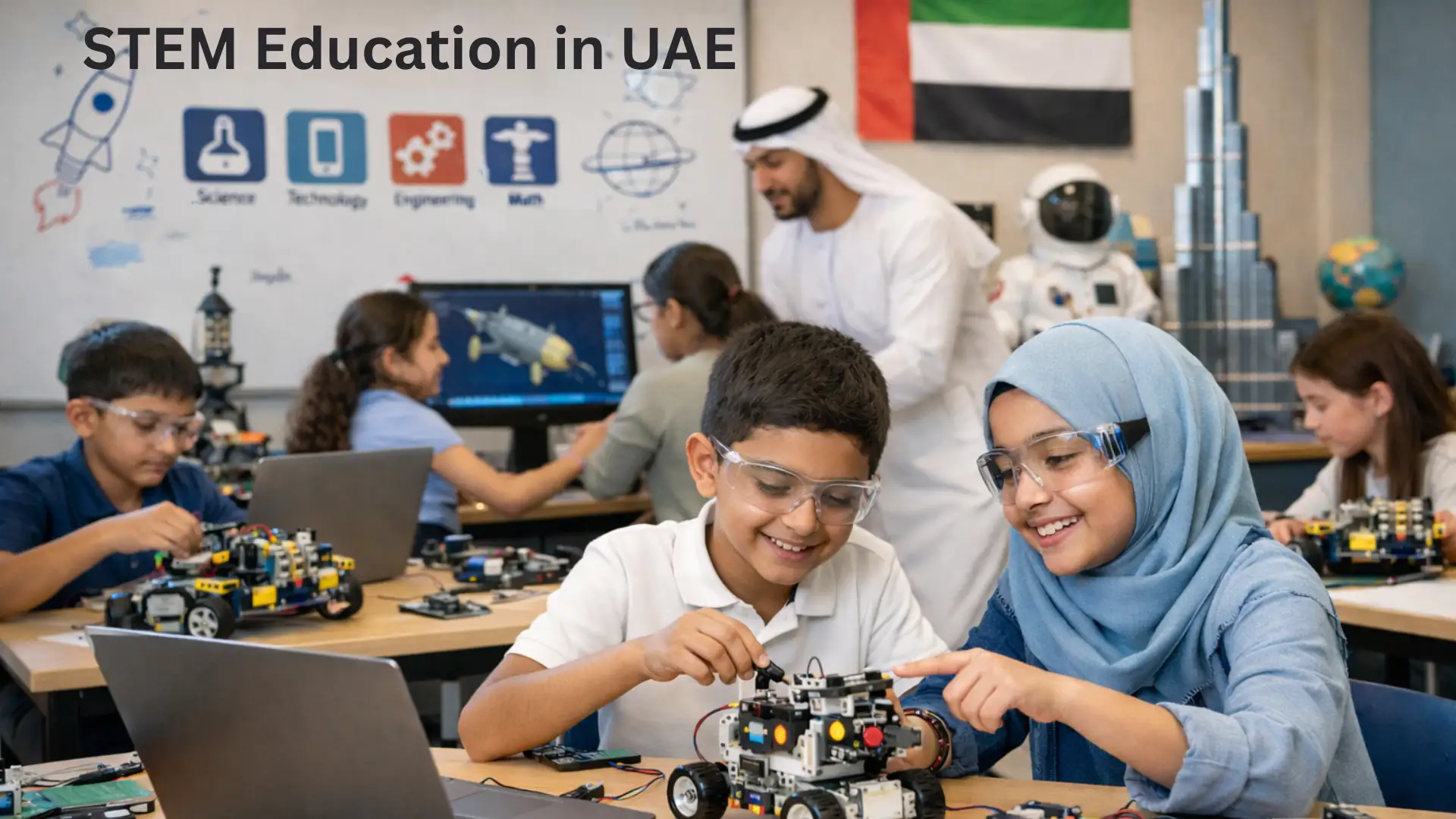
The UAE's new AI curriculum is already taking shape in classrooms. Khaleej Times reported on 8 September that schools are introducing AI concepts through play-based activities, storytelling, supervised digital tools and subject-specific lessons. The rollout follows the approval of the curriculum across all public and private schools, with students set to learn about AI data, algorithms, applications and risks, as well as how to use the technology ethically.
The implementation also involves training about 22,000 teachers and educators to use AI for teaching, assessment, curriculum analysis and lesson planning.
Starting with play, not screens
At JSS Private School Dubai, the approach with the youngest pupils is deliberately low-tech. “Very little of it involves a screen. At that age we call it AI awareness and exploration, and it is almost entirely play-based,” said Principal Chitra Sharma. A typical lesson, she said, might involve “sorting pictures into groups to see how a machine recognises patterns”, or giving a classmate step-by-step instructions to cross the room and watching what happens when a step is left out.
Where devices are used, the school turns to tools such as Scratch Jr under teacher supervision, alongside simple storytelling. Sharma was precise about what young children should take away: “What we expect of a six-year-old is limited but important: that a machine can follow instructions but does not think or feel; that a device only knows what people have taught it; that you do not give your name or your photograph to a screen without asking a grown-up.”
Supervised tools in the primary years
Raffles World Academy in Dubai introduces AI literacy gradually. “In primary, AI is woven into units of inquiry,” said Yolanda Maccallum, PYP Coordinator. Students may explore AI's role in medical diagnosis, enhance artwork with creative tools, or question whether answers from voice assistants can always be trusted.
In upper primary, students use teacher-monitored platforms, including Toddle AI Tutors and AI features in PowerPoint and Canva, “while being taught that technology should support rather than replace their own thinking,” said Nazia Choudhry, Secondary School Education Technology Coordinator.
At Shining Star International School Abu Dhabi, vice principal and school AI strategist Sim Ajay was similarly cautious: “At the early-primary level, understanding and responsible use come first. Children may interact with carefully selected, teacher-guided AI tools, but AI should enhance learning — not replace teachers, creativity, play or human interaction.”
Secondary: machine learning, ethics and real use
At Raffles World Academy, secondary students move into explicit AI education through subject-based and dedicated lessons aligned with UAE guidelines and the Ministry of Education's seven AI themes. Using supervised platforms such as Code.org, they progress from basic machine learning concepts towards neural networks, predictions, ethics and real-world applications. The school's stated aim goes beyond tool use: it wants learners who can assess AI's limitations and consequences.
Woodlem Education is focusing on the skills students will need as they progress through school. Founder and MD Noufal Ahmed said: “We also train teachers and encourage AI projects, challenges and competitions to inspire innovation and responsible digital citizenship.” At Dubai International Academy – Emirates Hills, Principal Hitesh Bhagat looked further ahead, to software that adapts to each learner: “If a student struggles with a concept, the software automatically triggers customised, bite-sized lessons to fill the gap. Advanced students are pushed forward at their own speed.”
Students at the table
“They are not the audience for an announcement,” Sharma said of students at JSS. A Student AI Council President sits on the school's AI Steering Committee alongside the Principal, the phase supervisors and a parent representative. “We have presented it to them as a journey from KG to Grade 12,” she said.
What this means for families and educators
Read together, these schools are teaching a habit of mind before they teach tools. Young children learn that machines follow instructions and only know what people have taught them. Older students learn to assess limitations, weigh consequences and build projects of their own. That is the right order, and it matches what Zeta42 believes: hands-on AI and robotics skills are worth most when judgement is taught alongside them.
Parents can reinforce at home what the classroom starts, beginning with the three things Sharma expects of a six-year-old. And the plan to train about 22,000 teachers is a reminder that adults are learning this at the same time as their children.
Source: khaleejtimes.com