From Baltimore to Abu Dhabi: Scaling Local STEM into AI-First Classrooms
Zeta42 · 3 September 2026
A new Baltimore STEM center highlights the power of community-backed learning. For the UAE, the lesson is clear: we must scale physical spaces into cognitive AI hubs.
Building the Groundwork: The Power of Community STEM
The recent ribbon-cutting ceremony on August 27, 2026, at East Baltimore's Collington Square Elementary/Middle School marked the opening of a new Cal Ripken, Sr. STEM Center. Supported by Johns Hopkins University and the Cal Ripken, Sr. Foundation, this state-of-the-art classroom is designed to strengthen critical thinking, collaboration, and problem-solving. It is a brilliant example of how targeted local infrastructure can empower young learners before they even enter the workforce.
From our vantage point at Zeta42 in Abu Dhabi, we see this as a vital piece of a larger global puzzle. While Baltimore builds physical spaces for foundational learning, the next logical step—especially for us in the Gulf region—is to rapidly transition these spaces into hubs for advanced computational and cognitive development.
The Shift from Traditional STEM to AI and Robotics
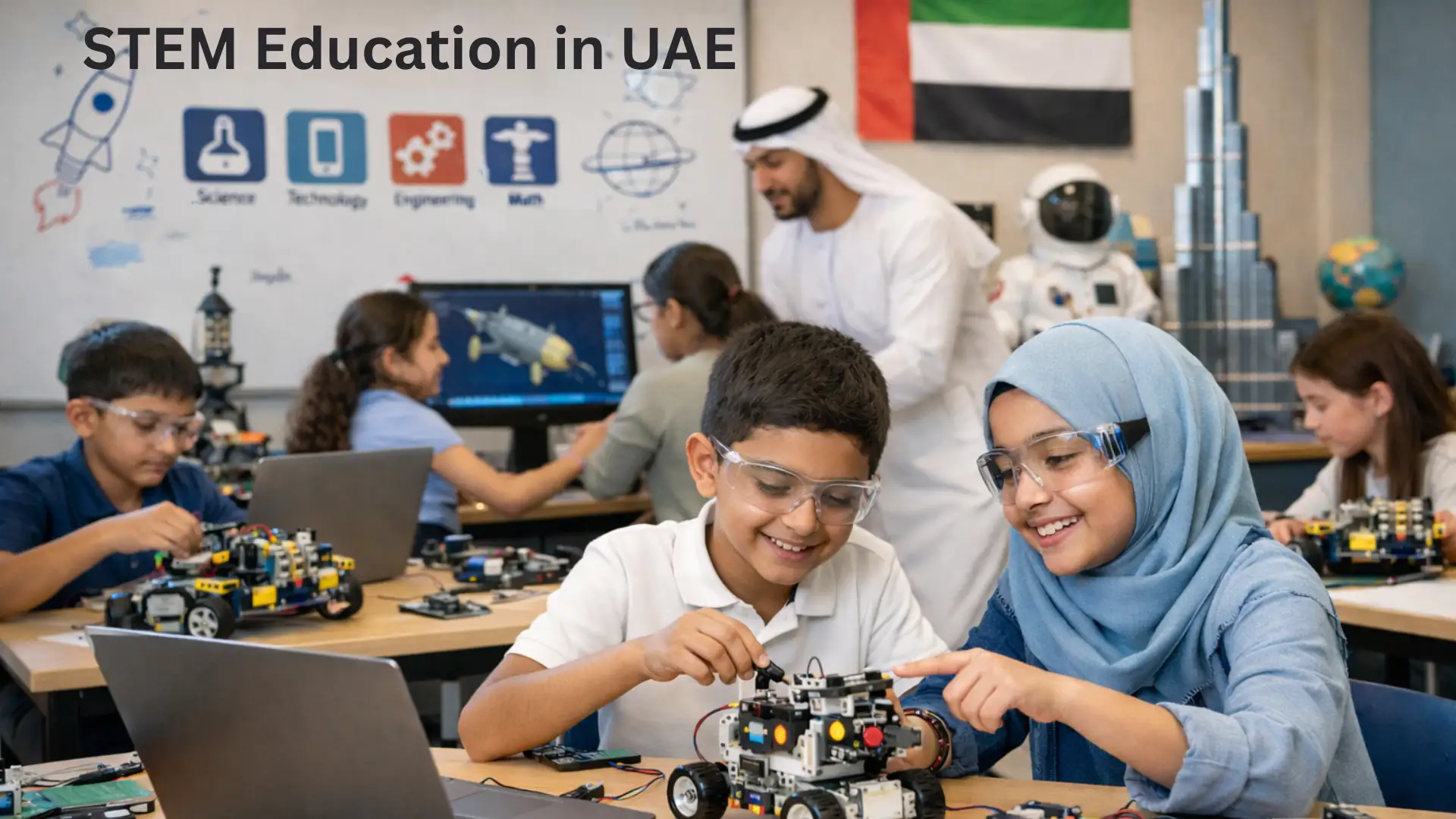
Basic STEM education is an essential starting block, but it can no longer be the finish line. As we design the future of UAE STEM education, we must ask ourselves how we can elevate these concepts. Physical classrooms must be integrated with cognitive learning technology to prepare students for a highly automated world.
"The true measure of modern educational infrastructure is not just the presence of tools, but how seamlessly it introduces youth to the AI-driven systems shaping our collective future."
By blending hands-on engineering with early-stage programming, we can foster a deep sense of digital literacy. Introducing initiatives like robotics for youth UAE programs ensures that children do not just consume technology, but actively learn to build, dissect, and manage it.
Cultivating Future Skills in the GCC
The Baltimore model proves that community-centric partnerships, like the one between Collington Square and Johns Hopkins, are key to sustainable education. In the Middle East, we have the unique opportunity to leapfrog traditional educational paradigms. By combining community-driven spaces with the advanced resources of our AI academy Abu Dhabi, we can democratize access to elite tech training.
Our focus must remain on equipping the next generation with the precise future skills GCC industries require. Elevating AI literacy Middle East initiatives from optional extracurriculars to core components of primary education is the only way to build a resilient, innovation-led economy.
Source: hub.jhu.edu